
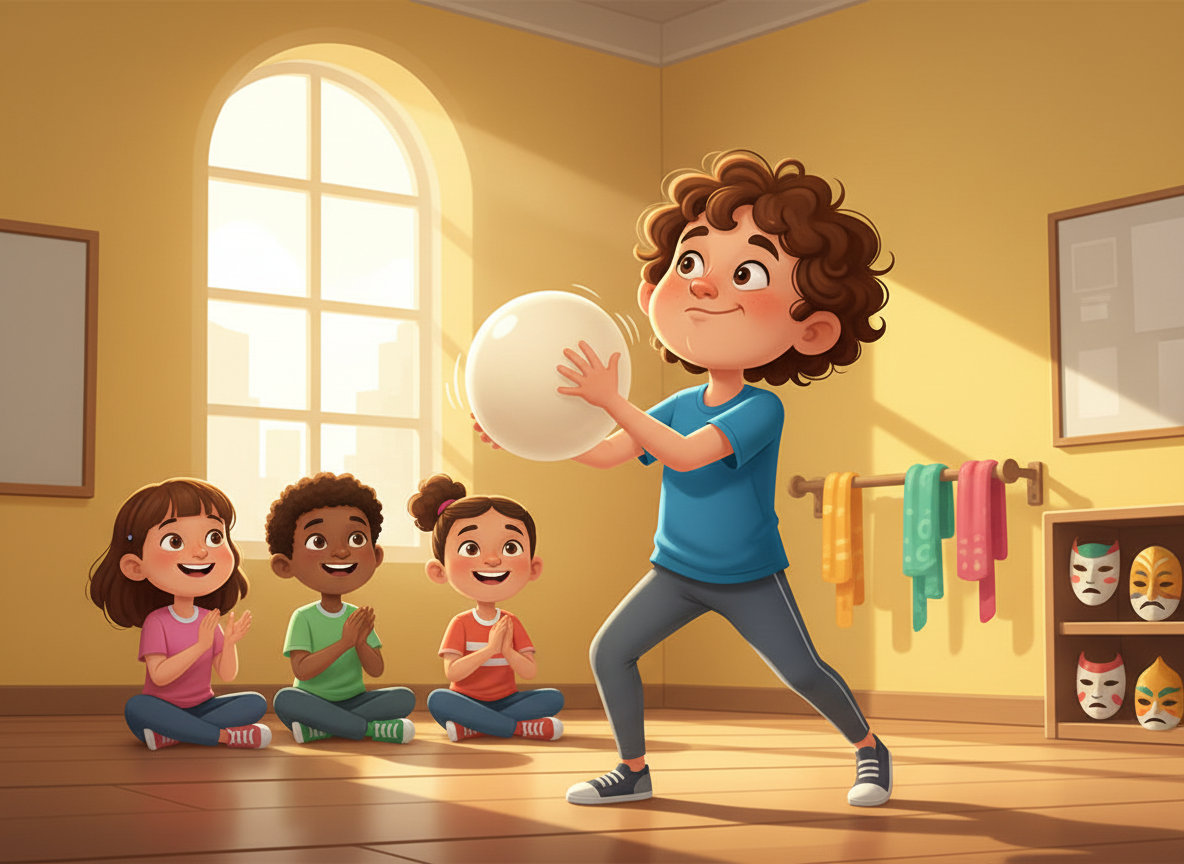
These solo mime activities for children develop physical storytelling, imagination and control. A solo mime tells a complete little story without dialogue: one performer creates the setting, imaginary objects and other characters through movement.
How to Practise a Solo Mime
- Decide where the scene takes place.
- Keep imaginary objects the same size and in the same position.
- Use facial expression and body language rather than words.
- Give the mime a clear beginning, problem and ending.
- Slow important actions down so the audience can understand them.
Solo Mime Activity 1: Washing the Dog
Carry in a heavy bath and put it down. Pour in imaginary water and test the temperature. Look for the dog and coax it towards the bath. The dog refuses, so lift the heavy animal in. Wash it carefully. Just as you finish, the dog jumps out, shakes water everywhere and runs away. Chase after it.
Solo Mime Activity 2: The Flyaway Balloon
Enter with a tray of balloons. Choose one and blow it up. Toss it into the air, catch it and tie on a string. The balloon starts to escape. Chase it, pull it back and try to stop it flying away. Sit on it—and react when it suddenly bursts. Pick up the remains and walk away sadly.
Solo Mime Activity 3: The Lion Tamer
The lion tamer enters and bows. Release an imaginary lion from its cage. The lion jumps towards you. Pick up a hoop and proudly indicate that the lion will jump through it. The lion refuses, jumps over it and then walks underneath it. Finally, the lion turns on the tamer and chases you offstage.
Try a Timed Mime Challenge
When children are comfortable creating a full scene, try the one-minute solo mime ideas and two-minute solo mime ideas. For longer performance outlines, see Solo Mime Performance Ideas for Children.
Find all of these resources in the Drama Start Mime Hub, or explore the wider Drama Start book collection.
Featured Books
Enjoyed these solo mime activities? Discover more creative movement and drama ideas for children.
Movement Start

Movement activities and stories to encourage expression, physical storytelling and imaginative play.
Drama Start Two

Drama activities and plays for children aged 9–12, including creative character work and performance ideas.

Comments (5)