
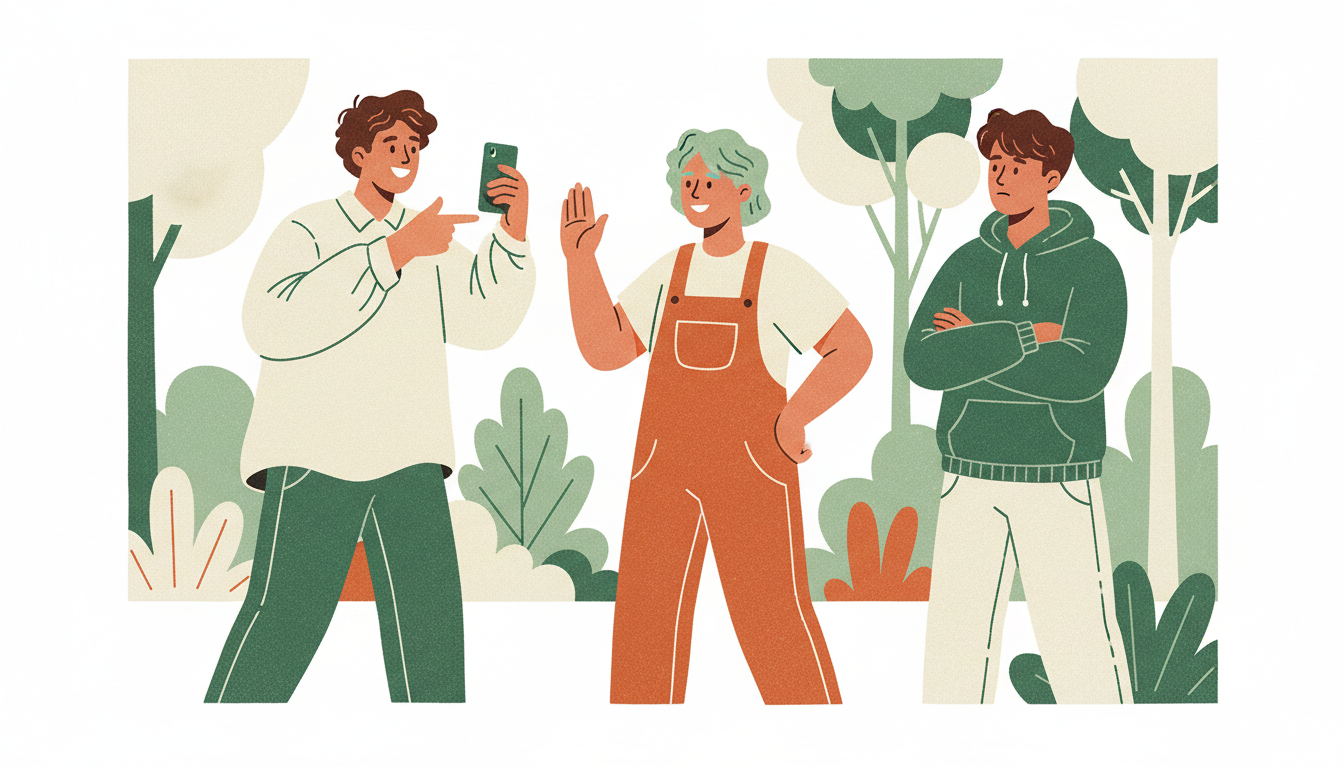
“I said you could take the photo. I didn’t say you could post it.”
That one line is enough to begin a drama workshop. Who took the photo? Who has already seen it? What happens when the person who posted it says, “But you look great in it”?
These five social media scenarios for teens work in a secondary classroom, youth group or drama workshop. Put participants in pairs or small groups. They can act, narrate or observe. Use invented characters and leave real names, messages and incidents out of the scenes. No phones are needed.
1. The photo nobody asked about
Three friends take a photo after a match. One posts it. Another asks them to take it down. The third has already shared it.
Start after the request to take the photo down. Play three lines, then freeze. Invite the third friend to say what they’re thinking: “I’ve shared it too, but neither of them knows.” Replay the moment and let them decide whether to speak up.
Ask the group: What could the friends do now that would actually help the person in the photo?
2. The screenshot that lost its meaning
Give two pairs the same final line: “Lovely of you to invite me!” One pair invents a scene in which the invitation was welcome. The other invents one in which the speaker found out about the event too late.
Play both scenes. Now ask someone to read the line aloud as if they’d received a screenshot of just those six words. Which meaning did they hear? What might happen if they forwarded it with their own interpretation attached?
3. The pressure to reply
At breakfast, a teenager finds a message from a friend: “You were online last night. Why didn’t you answer me?”
Place the two characters on opposite sides of the room. Ask each to say what they typed, what they deleted and what they finally sent. A friend might type “Are you annoyed with me?”, delete it and send “Fine, ignore me” instead. Let the other character respond only to the message they received.
Try a replay: What could the teenager say that sets a boundary and still sounds like them?
4. Just outside the frame
Three friends are smiling together in a post. A teenager looking at it thinks, “They had a brilliant time without me.”
Ask three participants to make the still image in the photo. A fourth describes what they think happened. Bring the image to life for the ten seconds before the photo was taken. Let the three friends decide what the camera missed.
Ask the viewer: Which part of your story could you actually see? Which part did you fill in?
5. The group chat vote
Someone starts a poll about whether a classmate should be removed from the group chat. A teenager thinks the poll is unfair. Their closest friend started it.
Freeze the scene before the teenager votes. Invite someone watching to take their place and try one response. They might challenge the poll in the chat, speak privately to their friend or check in with the classmate. Play each choice far enough to hear the reply.
Ask the group: Which response gave the classmate a say in what happened next?
One line to take away
Ask everyone to step out of role and choose one line they could imagine using themselves. It might be “Can you take that down?” or “What happened before that message?” Give pairs a chance to try saying it in their own words. Often the shortest line is the one they’ll remember.
Featured Book: Drama for Social Issues

For more workshops on social media pressure, exclusion and relationships, find my book Drama for Social Issues: Practical Workshops for Social Care, Youth Work and Education on Amazon.
