
Supporting children to understand and express emotions is a key part of early years education. Drama offers a rich, playful, and embodied way to help young children explore feelings like happiness, sadness, anger, pride, and worry. Below are three detailed activities from Drama Start: Exploring Emotions that you can use straight away in your classroom or setting.
Emotion Statues
Age: 4+
Minimum number of participants: 2
Resources needed: Clear space
Other benefits: Emotional vocabulary, body awareness, emotional regulation
Instructions
Invite children to move freely around the room. When you clap your hands or say “Freeze!”, they must stop and show a body shape that expresses a feeling. Use simple prompts to guide them:
- Happy: Big smile, arms out wide
- Sad: Shoulders slumped, head down
- Angry: Clenched fists, stomping stance
- Scared: Crouching, hands over face
- Proud: Chest out, hands on hips
Extension
Ask the group to guess what emotions their peers are showing. Invite children to suggest new feelings to include. You can also link the activity to weather (angry like a thunderstorm, calm like a gentle breeze) to develop metaphorical thinking.
Reflection Questions
- How did it feel to show different emotions in your body?
- Which emotion was the easiest to act out? The hardest?
- What clues helped you guess what your friends were showing?
The Shy Butterfly (Movement Story)
Theme: Building confidence and resilience
Age: 4+
Minimum number of participants: 2
Resources needed: Open space
Other benefits: Movement sequencing, self-expression, storytelling through the body
Story Instructions
Guide the children through this gentle story using expressive movement:
“A tiny butterfly has just come out of its cocoon. It feels shy and hides in a flower.”
(Children crouch down low)
“Slowly, it peeks out and flutters its wings.”
(Peek and flap arms gently)
“It takes a step forward, then hides again. But the sun is warm and the flowers are calling.”
(Step forward, step back)
“It feels braver and flies a little higher.”
(Flap and rise)
“It dances with other butterflies in the garden, then lands proudly on a tall sunflower.”
(Spin, tiptoe, stretch tall)
Open-Ended Questions
- Have you ever felt shy?
- What helped you feel brave?
- What would you say to help a friend who feels shy?
Emotion Animal Parade
Age: 4+
Minimum number of participants: 3
Resources needed: Clear space
Other benefits: Imagination, empathy, body control
Instructions
Call out a combination of an emotion and an animal. Children move around the space like that animal, showing the feeling with their whole body and face.
Examples
- Happy kangaroo – bouncing and smiling
- Grumpy bear – stomping with furrowed brows
- Scared rabbit – tiptoeing and hiding hands
- Proud lion – strutting with chest out
- Silly monkey – swinging arms and making funny faces
Variation
Invite children to suggest their own combinations. You can also use puppets or toys to model the movements first.
Reflection Questions
- How does your body feel when you’re pretending to be angry, sad, or excited?
- What would a shy mouse sound like?
- Can animals help us understand our feelings?
These process-led drama activities don’t require costumes or scripts. They rely on imagination, movement, and simple structures that support emotional literacy and creative play. They are ideal for early years settings, after-school clubs, or SPHE lessons.
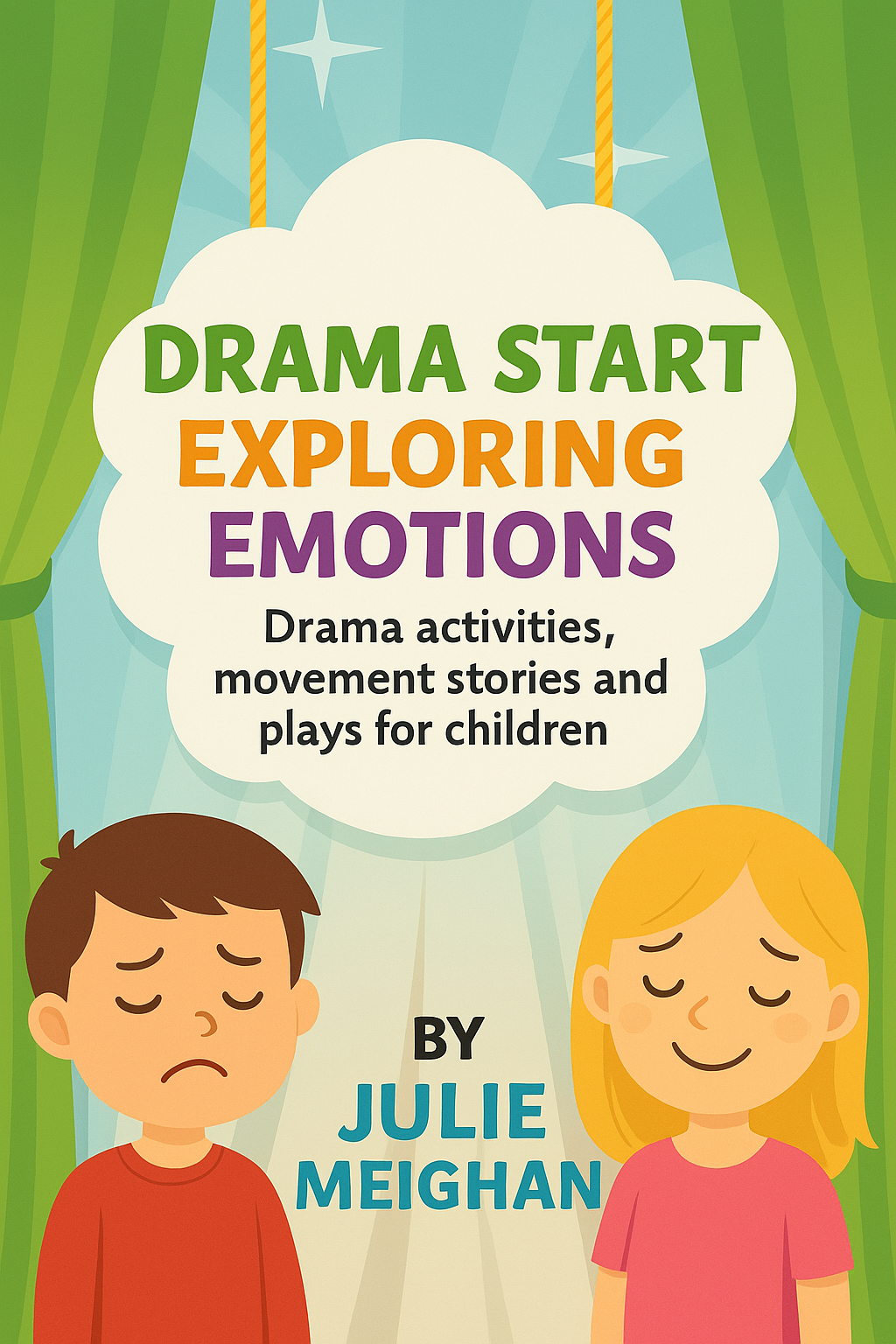
If you’d like more drama games, movement stories, action poems, and plays focused on emotional well-being, my book Drama Start: Exploring Emotions contains over 100 ready-to-use activities for children aged 4 and up.
Want more activities for exploring feelings? Explore Drama Start: Exploring Emotions on Amazon.
For more ideas, explore the Social and Emotional Drama Activities for Children collection, including games and workshops about feelings, confidence, empathy and friendship.
Featured Book: Drama Start: Exploring Emotions

Looking for more practical drama ideas? Explore Drama Start: Exploring Emotions for more activities and inspiration for working with children.

Comment